Procedures for Decontamination of Plutonium From Various Surfaces, Skin

Christensen, E. L, U.S. Atomic Energy Commission, and Los Alamos Scientific Laboratory. Procedures for Decontamination of Plutonium From Various Surfaces. Los Alamos, N.M.: Los Alamos Scientific Laboratory of the University of California, 1959. pp 19-21

See Also: USNRDL-TR-256 PROTECTING AND CLEANING HANDS CONTAMINATED BY SYNTHETIC FALLOUT UNDER FIELD CONDITIONS

Aluminum, Brass, Concrete, Glass, Iron and Mild Steel, Lucite, Plexiglass and Other Acrylic Plastics, Monel, Paint, Plastics Other Than Acryiic Based Plastics, Porcelain, Rubber, Skin, Stainless Steel and Tile.

SKIN

Immediate use of a synthetic detergent-sequestrant mixture has been reported to give better decontamination than if the use of the mixture is preceded by soap and water wash. However, no temperature was given for the water used and if the water was warm enough to cause the pores to open, the decontamination solution, normally used cold, would have a difficult time removing the activity. At Los Alamos steps

19

one and two of the recommended procedure normally give sufficient decontamination.

For decontamination of hair, omit the KMnO4 treatment.

A. Recommended procedure.

1. Lather with liquid soap, using cold water, rinse thoroughly.
2. If count still remains, wash with synthetic detergent and sequestrant in a ratio of 1:2. Rinse with water.

a. Sequestrants such as:

  1. Na EDTA-
  2. Citric acid
  3. Sodium citrate
  4. Sodium tartrate
  5. Sodium phosphates
    1. b. Do not use oxalates!

C.P. Cleaner, manufactured by Finley Products, Inc., is also satisfactory. Apply as label directs.

3. If count still remains, scrub with KMnO4 crystals wet with just enough water to make thick paste. Rinse thoroughly. Repeat 5 times. Remove color with a 4% NaHSO3 solution. (Use only as a last resort.)

4. Apply TiO2 paste and rub thoroughly. Remove by swabbing. Rinse thoroughly with water.

B. Decontamination solutions in order of decreasing effectiveness.

1. TiO2 paste (expensive)
2. KMnO4 paste; color removed with 4% NaHSO3

20

3. Synthetic detergent – sequestrant
4. C.P. Cleaner or similar hand cleaner
5. 3% trisodium nitrolotriacetate – synthetic detergent
6. 3% Na citrate, ph 7.0
7. 3% Na acetate, ph 2.0
8. 3% Na tartrate, ph 7.0
9. 3% Na lactate, ph 7.0
10. 3% glycine
11. 3% Na acetate, ph 7.0
12. Water with liquid soap
13. Isotonic saline solution

GOOGLE – 1400 NORTH SHORELINE BOULEVARD (T10000006049)

Microsoft Word – Memo_WhiteStripes_sanitary_sewer p 12


Microsoft Word – Memo_WhiteStripes_sanitary_sewer p 10
Microsoft Word – Memo_WhiteStripes_sanitary_sewer p 11

The project is a redevelopment property within the Teledyne-Spectraphysics (T-S) plume with underlying groundwater probably impacted by the upgradient T-S source properties. The developer plans to construct the building wiht a vapor intrusion mitigation system (VIMS) and water barrier. Indoor air testing will be conducted to verify that the VIMS is working as designed.

Envirostor (State of California)

Geotracker Map

Google Map

POTENTIAL CONTAMINANTS OF CONCERN

DICHLOROETHENE (DCE), TRICHLOROETHYLENE (TCE), VINYL CHLORIDE 


ADVANCED MICRO DEVICES, INC. SUNNYVALE, CA

EPA Superfund site

Site History

he Site was formerly identified as two properties: 901 Thompson Place and 902 Thompson Place. These properties have been re-developed and now have a single address: 875 East Arques Avenue, Sunnyvale, California (see site location map). Land use in this area is primarily industrial and commercial. The 901-902 Thompson Place property was formerly occupied by Advanced Micro Devices, Inc. (AMD) to manufacture integrated semiconductor circuits between 1969 and 1992. Two below-ground acid neutralization system (ANS) tank vaults were located at the northern and southern ends of the 901 and 902 Thompson Place buildings, respectively. The ANS tanks for both 901 and 902 Thompson Place were constructed of coated concrete and were used to contain acidic industrial wastewater that was neutralized by adding caustics before discharging to the sanitary sewer. The wastewater also contained volatile organic compounds (VOCs).
Soil and groundwater investigations were conducted by AMD in 1983 and 1984 to assess the impact of releases from both ANS structures. The results of these investigations indicated the presence of VOCs in soil and groundwater samples collected from the area near the ANS structures. Both ANSs and surrounding VOC-affected soils were removed between 1983 and 1992. Groundwater extraction and treatment was conducted from 1983 until December 2002. In situ biological treatment of VOCs in groundwater and saturated soil has been conducted since 2002 and is ongoing.

Soil impacted primarily by VOCs was excavated from source areas ANS-901 and ANS-902 over three separate excavation events.
The relatively low VOC concentrations in monitoring wells within the uppermost water bearing zone (approximately 10 to 20 feet bgs), where TCE concentrations have generally been less than 100 g/L down-gradient of the former ANS-901 source area, suggest that no substantial source for TCE exists in unsaturated zone soil at the Site.

In 2007, Summit Commercial Properties, Inc. (Summit) the current owner of the Site, demolished the building and built a rental storage facility in its place. Continue reading “ADVANCED MICRO DEVICES, INC. SUNNYVALE, CA”

USNRDL- 100 boxes of previously unknown Shipyard radiological documents – Dianne Feinstein 9-4-2004 Senate Hearings

MILITARY CONSTRUCTION APPROPRIATIONS FOR FISCAL YEAR 2004 “HEARINGS BEFORE A SUBCOMMITTEE OF THE COMMITTEE ON APPROPRIATIONS UNITED STATES SENATE ONE HUNDRED EIGHTH CONGRESS FIRST SESSION ON H.R. 2559/S. 1357 AN ACT MAKING APPROPRIATIONS FOR MILITARY CONSTRUCTION FOR THE DEPARTMENT OF DEFENSE FOR THE FISCAL YEAR ENDING SEPTEMBER 30, 2004, AND FOR OTHER PURPOSES

QUESTIONS SUBMITTED BY SENATOR DIANNE FEINSTEIN
NAVY
p. 84-87
HUNTERS POINT NAVAL SHIPYARD
https://hdl.handle.net/2027/pst.000051620332?urlappend=%3Bseq=90

Question. What is the Navy’s estimated cost to complete the cleanup of Hunters Point Shipyard? What is the budget for the current fiscal year and each of the next 2 fiscal years?

Answer. Cost to complete for fiscal year 2004 and out is $103.9 million. Budgets for current and next 2 fiscal years are $40.2 million in fiscal year 2003, $21.6 million in fiscal year 2004, and $1.9 million in fiscal year 2005. Budget estimates for fiscal year 2004 and fiscal year 2005 assume the receipt of land sale revenue to finance cleanup costs.

Question. Given the Navy’s recent discovery of more than 100 boxes of previously unknown Shipyard radiological documents, will the new radiological review and survey work come at the expense of other important, and budgeted, cleanup activities or will the Navy find other funds to pay for it?

Answer. Funding to pay for the expanded Historical Radiological Assessment (HRA) will not be taken from funds budgeted for cleanup at Hunters Point.

Question. Does the Navy see any remaining hurdles to moving forward with the Conveyance Agreement in the next 1–2 months?

Answer. The Navy is working diligently with the City of San Francisco to reach agreement on the Hunters Point Conveyance Agreement.  The Navy’s goal is to achieve a mutually agreeable solution to the remaining two significant issues (utilities transition plan and finalization of the deeds) within the next 1 or 2 months.

USNRDL-TR-256 PROTECTING AND CLEANING HANDS CONTAMINATED BY SYNTHETIC FALLOUT UNDER FIELD CONDITIONS

Purposely contaminating hands to see what damage it would do and to figure out how to protect hands during radiation tests. Also this shows how they lay out radiation tests with the names of the mailing lists. At the time of publication this was secret information so they kept track of who got which report. Note “* number” is the citation number. La140 is Lanthanum 140 a radioactive isotope which is a daughter product of Barium 140 and due to its use this means that at Camp Stoneman had a hot cell on hand to mix the radioactive materials into the sand so workers deposited the radiation using lawn fertilizer spreaders onto roofs, yards and roads in what is now modern day Pittsburg California.

This article is the result of the staff being contaminated by spreading radioactive materials all over buildings, streets and roads of what is present day Pittsburg California and was the second Camp Stoneman radiation test published in 1958. Previous studies had been conducted using more damaging long lasting radiological isotopes and they wanted to make sure that they were cleaning up with sufficient means to protect themselves from the radiation.
Pittsburg California Radiation Experiments covering half of the City

PROTECTING AND CLEANING HANDS CONTAMINATED BY SYNTHETIC FALLOUT UNDER FIELD CONDITIONS Research and Development Technical Report USNRDL-TR-256
NY 320 – 001
U. S. Army
27 August 1958
by
R. H. Black
U. S. NAVAL RADIOLOGICAL DEFENSE LABORATORY San Francisco 24, California

Health and Safety Technical Objective AW-5C – Technical Developments Branch
M. B. Hawkins, Head Chemical Technology Division
E. R. Tompkins, Head Scientific Director Commanding Officer and Director P. C. Tompkins
Captain J. H. McQuilkin, USN
U. S. NAVAL RADIOLOGICAL DEFENSE LABORATORY San Francisco 24, California

ABSTRACT Hands of field test personnel became radioactively con- taminated with (a) dust slurry synthetic fallouts containing La140 tracer, and (b) La140 in acid solution. Two protective creams and several cleaning materials were used in an attempt to reduce adherance of contaminant and to facilitate decontamination. The protective creams were not found to be advantageous. Three experimental cleaning solutions (isotonic neutral solution of a complexing agent plus a detergent and germicide; an isotonic saline solution at pH 2.0 plus detergent and germicide; and a 3% citric acid solution) were found to decontaminate skin more readily than soap and water. A waterless mechanic’s hand cleaner was found to clean hands with the same effectiveness as soap and water.

Continue reading “USNRDL-TR-256 PROTECTING AND CLEANING HANDS CONTAMINATED BY SYNTHETIC FALLOUT UNDER FIELD CONDITIONS”

Lennar HQ at HPS is contaminated with nuclear radiation officials and politicians exposed to cancer causing isotopes

City of San Francisco Officials, City Staff, Politicians and their families, why do you think your are immune to radiation? It is not just for poor people, it is an equal opportunity killer and you were exposed.

Lennar builders couldn’t have picked a worse site to locate their site office at Hunters point Shipyard, the Submarine Barracks, the decontamination chamber for the dock workers who sandblasted the radioactive ships from the Atomic Bomb tests in the Pacific.

If you worked for Lennar, or if you were a city official, or staff for the politicians, or a politician, and their families who did photo ops on the shipyard, you will need to watch out for cancer for the rest of your lives. That means telling your doctor that you were needlessly exposed to the products of an Atomic Bomb:

EPA Facts about Plutonium
EPA Facts About Strontium 90
EPA Facts about Cesium 137
EPA Facts about Cobalt 60 Continue reading “Lennar HQ at HPS is contaminated with nuclear radiation officials and politicians exposed to cancer causing isotopes”

Dublin California Radiation Experiments at Camp Parks


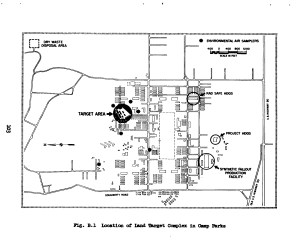
Camp Parks is a Air Force Base that was previously a Navy Base used for radiation experiments in the late 50’s to mid 60’s where they purposely spread radioactive materials onto streets, yards and buildings in order to figure out how to clean up after a nuclear blast. The Navy created dirty bomb incidents all over the Bay Area and trained military personnel from all branches to clean up after a nuclear blast to remove the radiation by scrubbing, firehosing or with street sweepers etc. In the early days, the late 1940’s they thought that fallout was not dangerous, it was not until Operation Castle in 1954 when radioactive fallout fell onto Enewetak Atoll where US military personnel were stationed as well as natives and they got radiation burned from the fallout.

Camp Parks Cobalt 60 Experiments
Camp Parks was used for many radiation experiments Which I will list above when I get the articles up on the site. Fortunately in Complex III tests they decided to limit the amount of radiation they spread onto the grounds, the roads and buildings to .1R per hour which today is a nuclear accident in a nuclear power plant.

Later it would dawn on the Navy that they could use a d
ifferent colored sand and then just count the grains to figure out the amount of fallout. Continue reading “Dublin California Radiation Experiments at Camp Parks”

Treasure Island California Site

I am posting more Treasure Island sources on this site as the amount of content would fill up my Disaster Area site. So for the time being, search this site and the Treasure Island California Site for content on Treasure Island. It is quite extensive.

https://treasureislandcalifornia.wordpress.com/

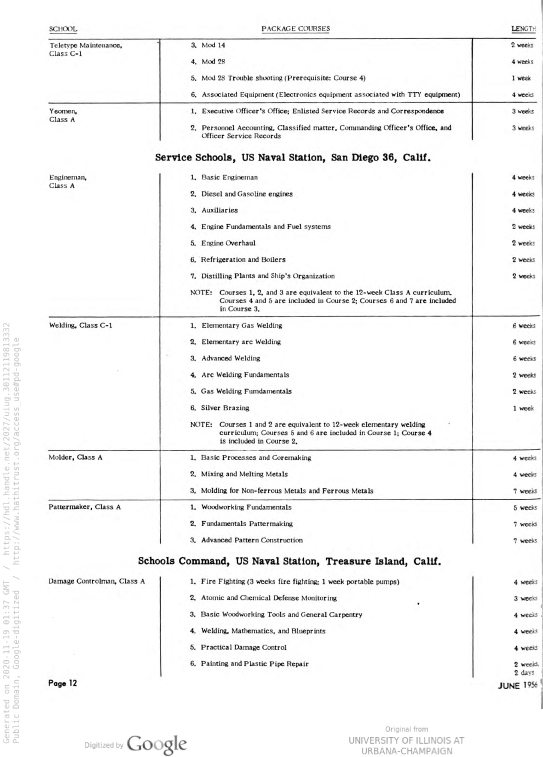
Treasure Island – Naval Training Bulletin. 1956-57 June p 12 Damage Controlman, Class A Courses

Schools Command, US Naval Station, Treasure Island Calif., Naval Training Bulletin. 1956-57 June p 12 HathiTrust page

1. Fire Fighting (3 weeks fire-fighting; 1 week portable pumps) 4 weeks
2. Atomic and Chemical Defense Monitoring – 3 weeks
3. Basic Woodworking Tools and General Carpentry 4 weeks
4. Welding, Mathematics, and Blueprints 4 weeks
5. Practical Damage Control 4 weeks
6. Painting and Plastic Pipe Repair 2 weeks, 2 days

Treasure Island – Biological and Chemical Training on USS Pandemonium Dec 1956 Naval Training Bulletin

USS Pandemonium being built for Biological, Chemical training. Naval Training Bulletin December 1956 pp 9-11. HathiTrust Link
Note the students training:
Page 10: July 1955 – – Students practice Biological and chemical warfare countermeasures on deckhouse.
PAGE 10: Lower right Construction work is suspended temporarily for class drills.
pAGE 11: September 1956 – – A class hoses down the main deck aft. The 40 mm and K guns have just been acquired.

Naval Training Bulletin December 1956, pg. 9