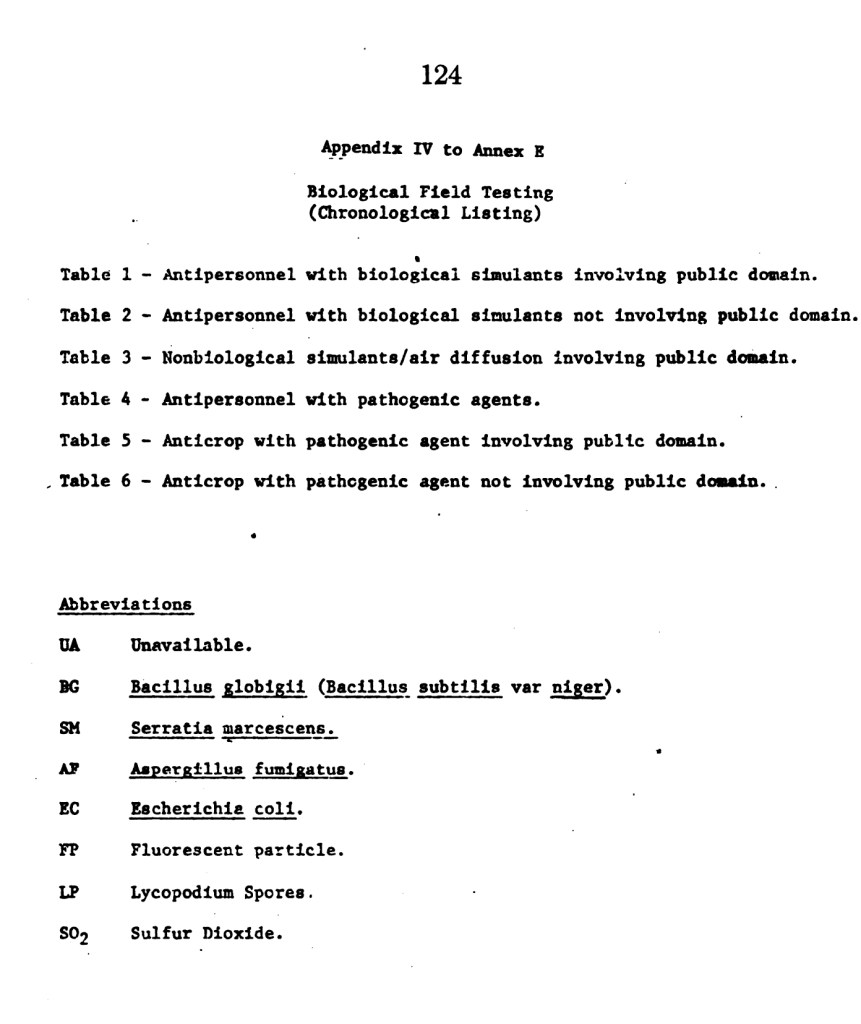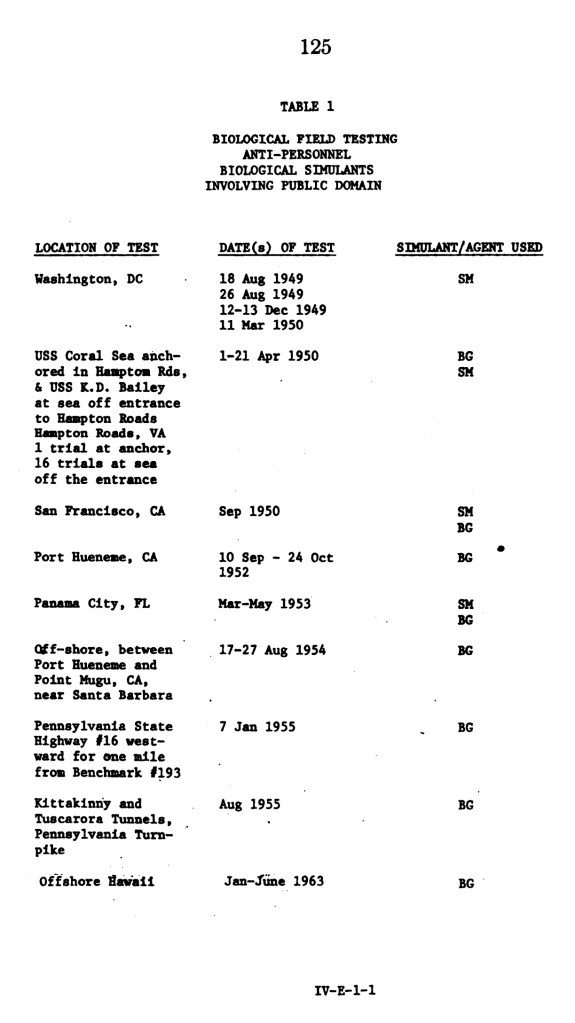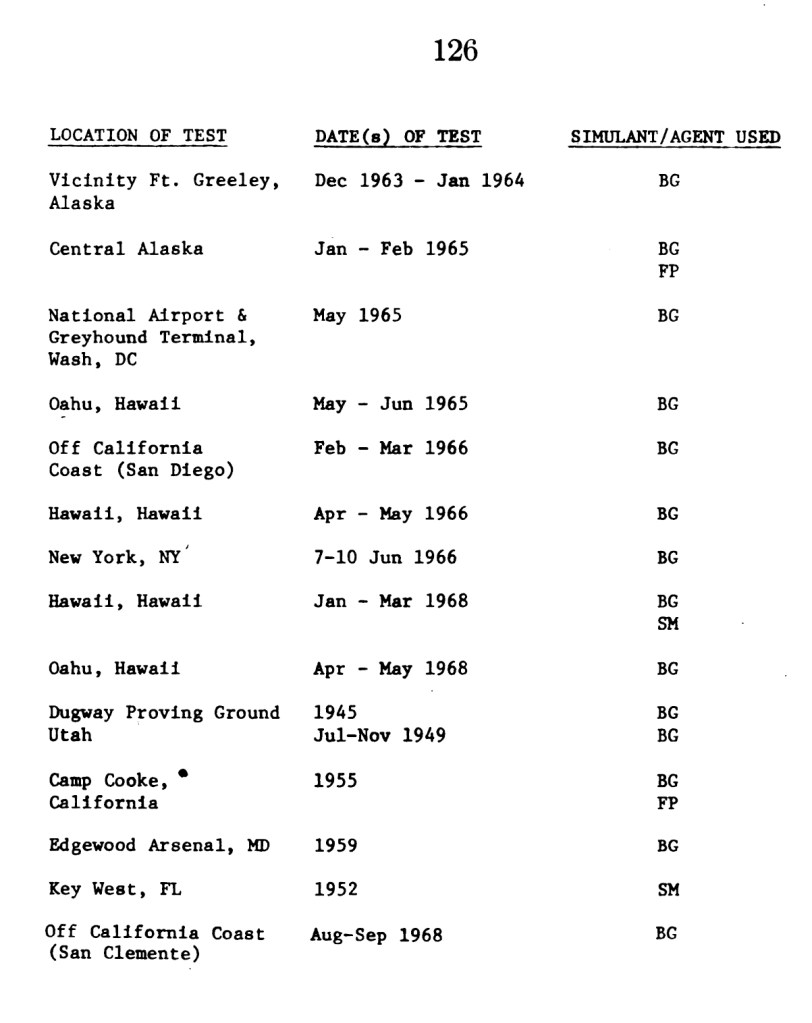
245 biological experiments on US citizens in cities and bases, Navy Biological Warfare Lab in SF Bay

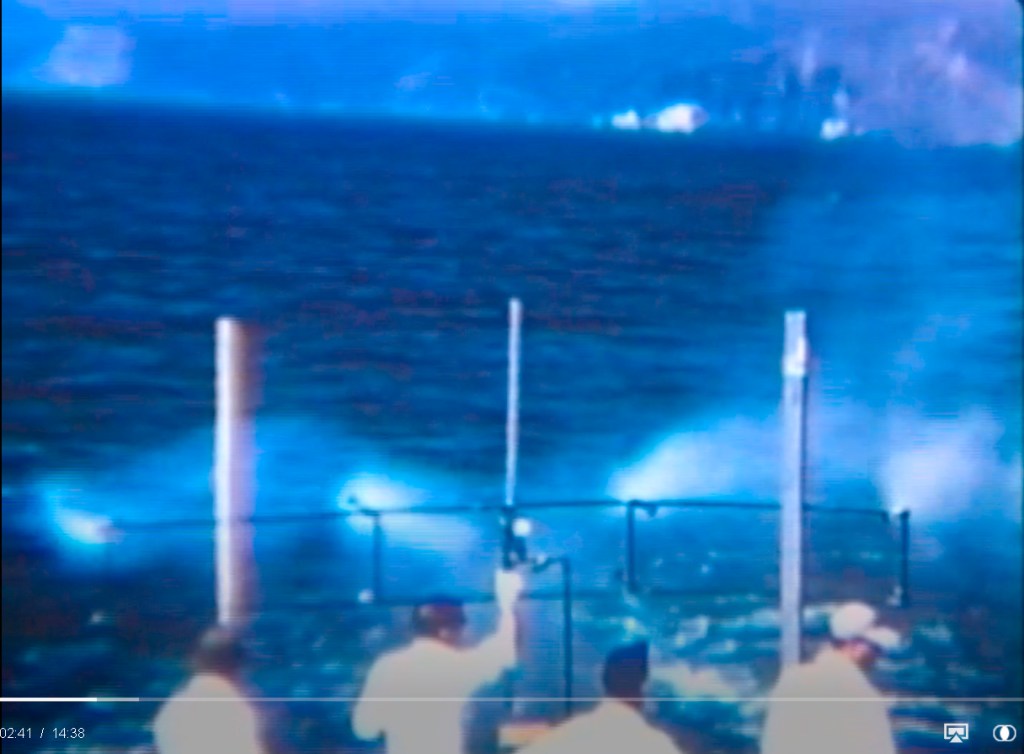
Film of the Navy purposely contaminating 43 square miles of San Francisco with Serratia marcescens in 1950 and in color, at 2:25 “Naval Concepts of Chemical and Biological Warfare” Naval Concepts of Chemical and Biological Warfare (1952), Department of Defense Film Production, National Archives and Records Administration Catalogue # 428.MN.9170A, Declassified NND Authority # 64044

This article will be divide up in sections:

ABC Warfare Defense, Navy Training Course, Bureau of Naval Personnel, NAVPERS, 1960 10099 p 124
notice Alcatraz in the background and the headlands
  • Biological testing involving human subjects by the Department of Defense, 1977 hearings before the Subcommittee on Health and Scientific Research of the Committee on Human Resources, United States Senate, Ninety-fifth Congress, first session … March 8 and May 23, 1977
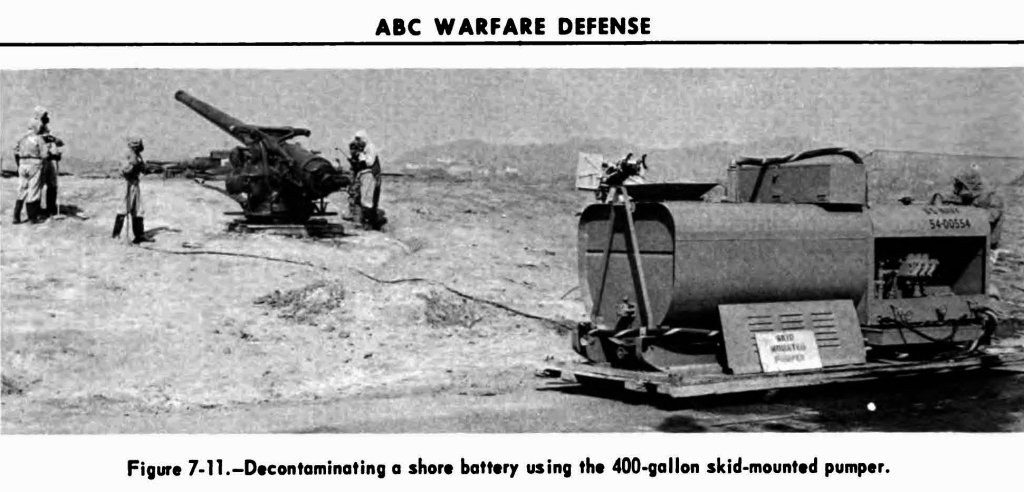
  • p 124
  • Biological testing involving human subjects by the Department of Defense, 1977 hearings before the Subcommittee on Health and Scientific Research of the Committee on Human Resources, United States Senate, Ninety-fifth Congress, first session … March 8 and May 23, 1977
  • p 125
  • Biological testing involving human subjects by the Department of Defense, 1977 hearings before the Subcommittee on Health and Scientific Research of the Committee on Human Resources, United States Senate, Ninety-fifth Congress, first session … March 8 and May 23, 1977
  • p 126
    Continue reading “245 biological experiments on US citizens in cities and bases, Navy Biological Warfare Lab in SF Bay”

    The Naval Biological Warfare Laboratory at Oakland Supply Center and the University of California Berkeley

    The Naval Biological Warfare Laboratory in Oakland run by the University of California Berkeley, conducted experiments in infectious disease, fungii, Chemical, Biological and Radiological research for the purpose of protecting Naval Personnel in combat and to develop vaccines and therapeutic methods to treat diseases. Also notice the diseases that affect livestock are an example of a biological weapon. It is this lab that lead the way to the Polio Vaccine and other major works in saving lives. The site is now being developed for real estate.

    The following diseases are featured in this publication – PUBLICATIONS of the Naval Biological Laboratory, School of Public Health University of California and Naval Medical Research Unit #1 Berkeley, California 1942-1965. Notice the articles on dispersing disease over large areas.

    Note many of these diseases were used in Biological warfare tests on the unsuspecting public all over the United States. See main article “245 biological experiments on US citizens in cities and bases, Navy Biological Warfare Lab in SF Bay.”

    Acute toxicity of alcohol

    Anthrax – Bacillus anthracis and Bacillus cereus – Inactivated Bacillus anthracis and Bacillus cereus Biovar anthracis – https://www.cdc.gov/anthrax/basics/index.html

    Bacteriophageshttps://www.ncbi.nlm.nih.gov/books/NBK493185/

    Botulism – Botulinal toxin and hemagglutinin

    Bovine Rhinotracheitis Virus – The infectious bovine rhinotracheitis (IBR) virus belongs to the group of herpes viruses. It causes in cattle a severe disease predominantly in the upper respiratory tract. Morbidity rate is 100 percent
    https://pubmed.ncbi.nlm.nih.gov/165129/

    Brucella melitensis – Exposure to most species of Brucella, such as those associated with certain types of animals, could potentially lead to infection.
    https://www.cdc.gov/brucellosis/clinicians/brucella-species.html

    Catarrhal fever
    https://www.cfsph.iastate.edu/Factsheets/pdfs/malignant_catarrhal_fever.pdf

    Coccidioides immitis – fungus – coccidioidomycosis. Valley Fever
    https://www.cdc.gov/fungal/diseases/coccidioidomycosis/index.html

    Colorado tick fever virus
    https://www.cdc.gov/coloradotickfever/index.html

    Encephalomyocarditis viruses
    https://www.cfsph.iastate.edu/pdf/shic-factsheet-encephalomyocarditis-virus

    Hog Cholera Virus – Classical Swine Fever
    https://vetmed.iastate.edu/vdpam/FSVD/swine/index-diseases/classical-swine-fever

    Influenza

    Influenza B

    Klebsiella pneumoniae
    https://wwwnc.cdc.gov/eid/article/27/2/20-4662_article

    Malleomyces pseudomallei – Bacterium Melioidosis is also called Whitmore disease, Vietnamese time bomb, Nightcliff gardener’s disease, morphia injector’s septicaemia, and paddy-field disease. https://dermnetnz.org/topics/melioidosis

    Murine hepatitis
    https://www.ncbi.nlm.nih.gov/sites/ppmc/articles/PMC7095071/

    Pasteurella pestis – Plague Black Death

    Pneumonic plague in mice
    https://emergency.cdc.gov/agent/plague/faq.asp

    Polio
    https://www.cdc.gov/polio/what-is-polio/index.htm

    Serratia marcescens
    https://www.ncbi.nlm.nih.gov/pmc/articles/PMC3592283/

    Shigella
    https://www.mayoclinic.org/diseases-conditions/shigella/symptoms-causes/syc-20377529

    Staphylococci – Staph
    https://medlineplus.gov/staphylococcalinfections.html

    Tubercle bacilli – Tuberculosis
    https://www.cdc.gov/tb/

    Vesicular exanthema of swine – eradicated in 1956

    Vesicular-stomatitis Virus – horses cattle and swine
    https://www.aphis.usda.gov/aphis/ourfocus/animalhealth/animal-disease-information/cattle-disease-information/vesicular-stomatitis-info

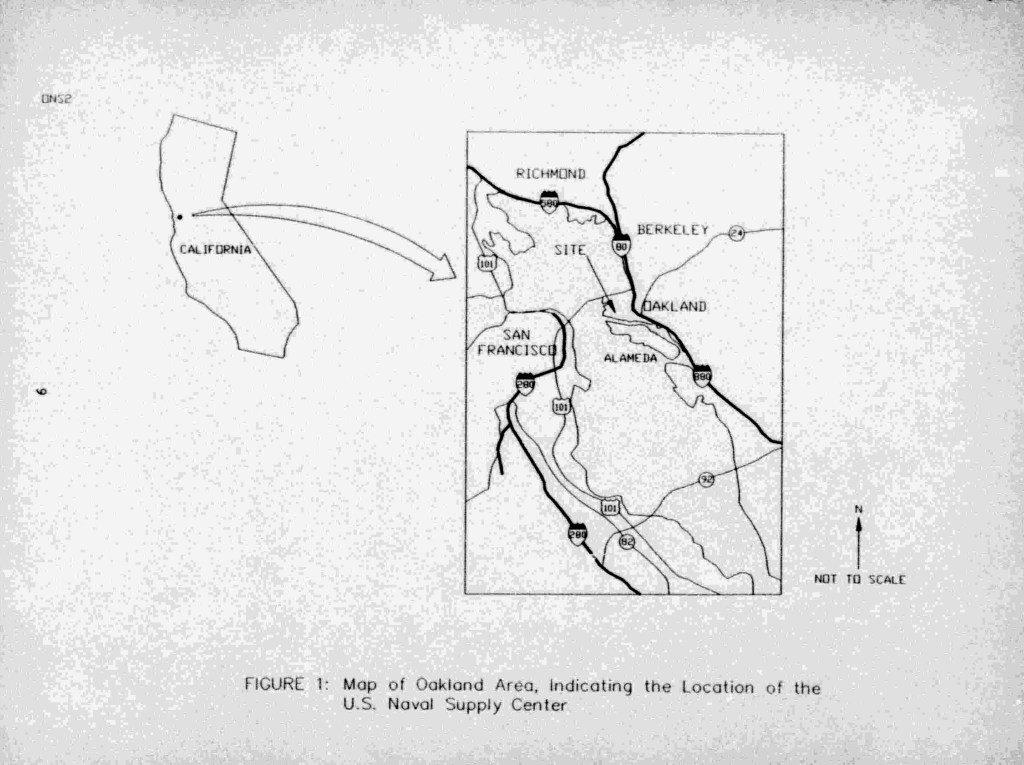
    CONFIRMATORY RADIOLOGICAL SURVEY OF THE NAVAL BIOSCIENCES LABORATORY Region U.S. NAVAL SUPPLY CENTER, OAKLAND, CALIFORNIA, Radiological Site Assessment Program
    Manpower Education, Research, and Training Division, FINAL REPORT MAY 1988, P.R.COTTEN, at Nuclear Regulatory Commission Website
    Continue reading “The Naval Biological Warfare Laboratory at Oakland Supply Center and the University of California Berkeley”

    Palo Alto Nuclear Reactor at Baylands Nature Preserve Trailhead and the Dover Nuclear Disaster

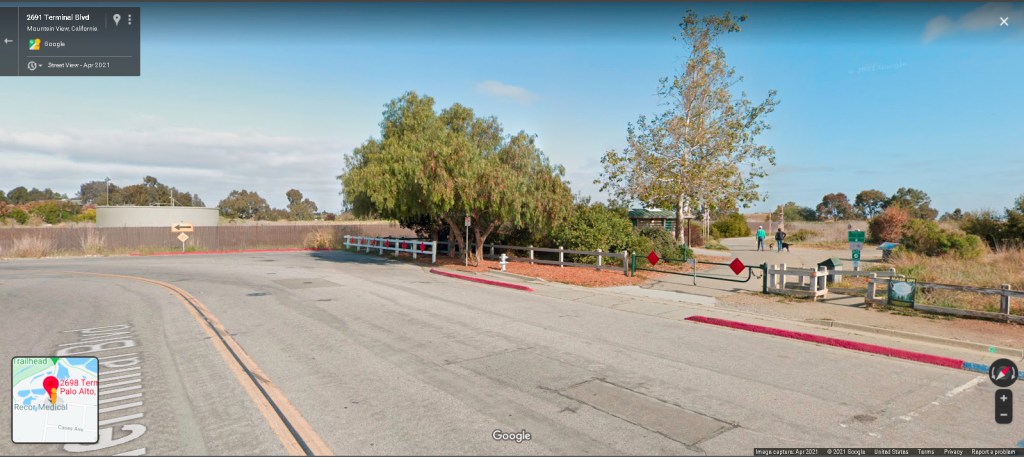
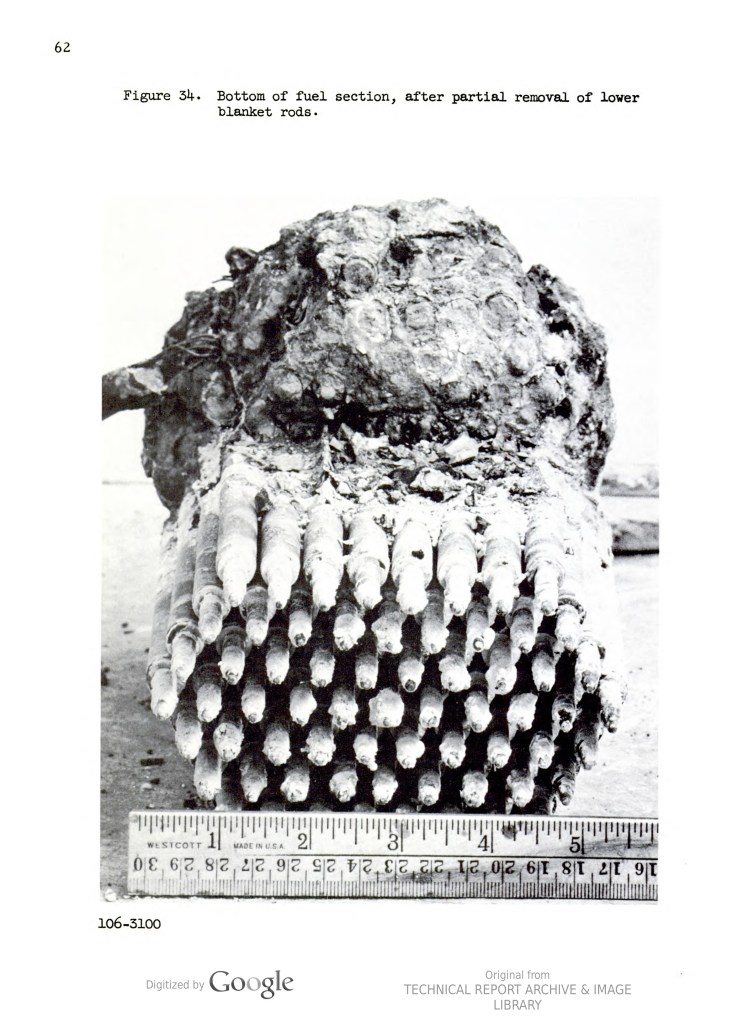
    On the left is a nuclear reactor core, on the right is the Palo Alto Baylands Nature Preserve Trailhead

    On the left is a nuclear reactor core, on the right is the Palo Alto Baylands Nature Preserve Trailhead. This company would have a nuclear disaster in a sister plant in New Jersey which resulted in the closure of all of their plants nationwide due to mismanagement.

    Google Map

    International Nutronics Inc ran the Palo Alto reactor also had a reactor in Dover New Jersey (below) that had a serious nuclear accident which the company did not report to the NRC and this resulted in the closure of this reactor in Palo Alto. The company started off at 200 Third St. Los Altos but they had three reactor sites, one in Irvine and this one and the Dover New Jersey plant and a sewage Treatment plant in Menlo Park where they irradiated sewage to kill bacteria.

    The Palo Alto facility had 750,000 Curies of C0-60 source and was used to irradiate food to kill bacteria and for cleaning medical equipment. Basically they would place these things in containers over the reactor and open it up to be irradiated.

    “The potential personnel radiation exposure hazard posed by the sources at large irradiators is substantial. For example, the unshielded dose from a 250,000 Ci Co-60 source is approximately 250,000 rem/hr (69 rem/sec) at 4 feet and approximately 25,000 rem/hr (6.9 rem/sec) at 13 feet. Therefore, a lethal dose could be received within minutes.” – Review of Events at Large Pool-Type Irradiators, E.A. Trager, Jr., Division of Safety Programs Office for Analysis and Evaluation of Operational Data U.S. Nuclear Regulatory Commission Washington, DC 20555 March 1989

    Continue reading “Palo Alto Nuclear Reactor at Baylands Nature Preserve Trailhead and the Dover Nuclear Disaster”

    Apple is located on GE Intersil Superfund site that received radiological isotope Kr 85 from the DOE


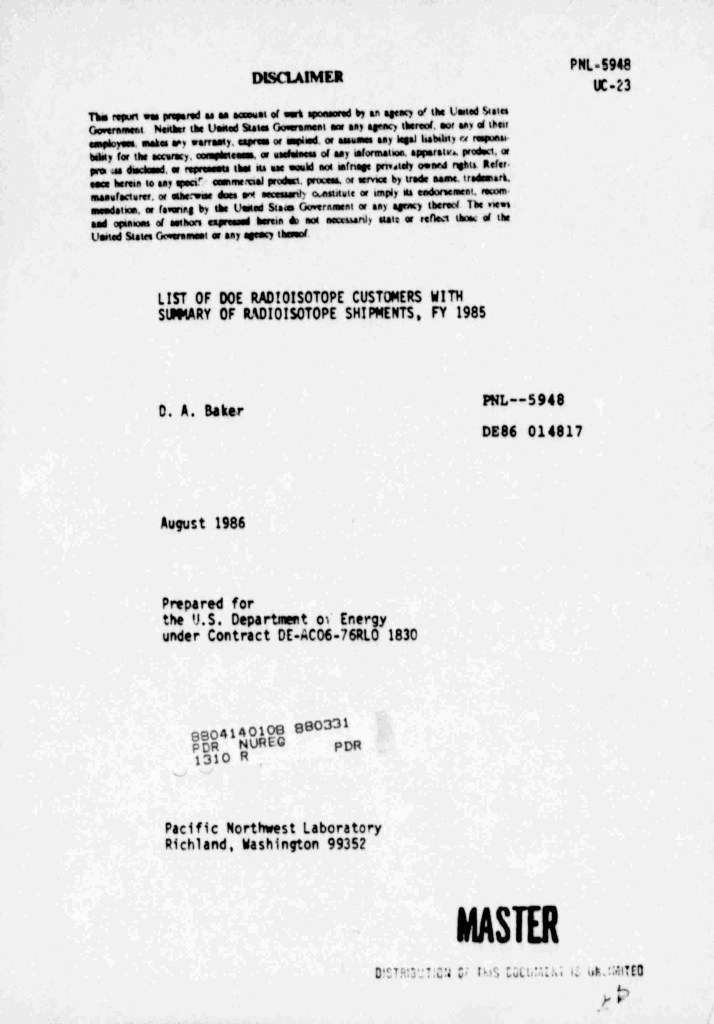
    “List of DOE Radioisotope Customers w/Summary of Radioisotope Shipments,FY85.”
    D. A. Baker
    08/31/1986
    Prepared for the U. S. Department of Energy under Contract DE-AC06-76RLO 1830

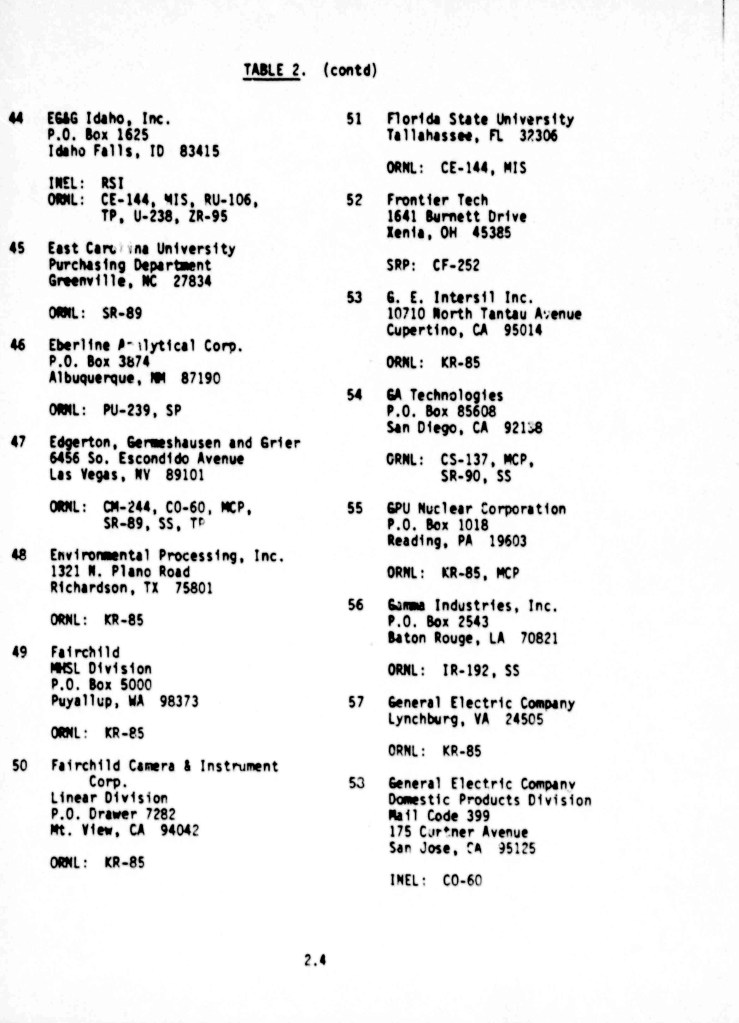
    Page 2.4 Item number 53.
    G. E. Intersil Inc.
    10710 North Tantau Avenue
    Cupertino, CA 95014


    Given that the Superfund site is the G. E. Intersil site, this associates it with the San Jose G. E. nuclear reactor assembly plant where they were assembling portable nuclear reactors for the US Army, a project started in the mid 1950s when radiological contamination levels were very relaxed and when they were strengthened in 1959 to 1/3 of what they were before, so all of these reactors were too hot for safe use. The entire program was scrapped by 1965. But this program required a large amount of new electronics and this brought about the beginnings of Silicon Valley.

    Unfortunately for the people of San Jose they were dumping waste directly into the sewer system using 1955 standards which are nuclear accidents today. That is the problem with nuclear radiation, the clean up standards of the past, including the most recent past have been less and less radiation so that a site cleaned up 25 years ago is an accident today!

    These were portable nuclear reactors that you could put on a truck, a transport plane, a ship or a train and bring it to a military site that had a deep pool with all of the necessary hook ups to set up a nuclear reactor to power the base or for colleges and universities. These reactors had no meaningful shields and were a serious radiological hazard to modern specifications.

    San Jose CA – GE Nuclear Fuel Processing Facility at The Plant Shopping Center

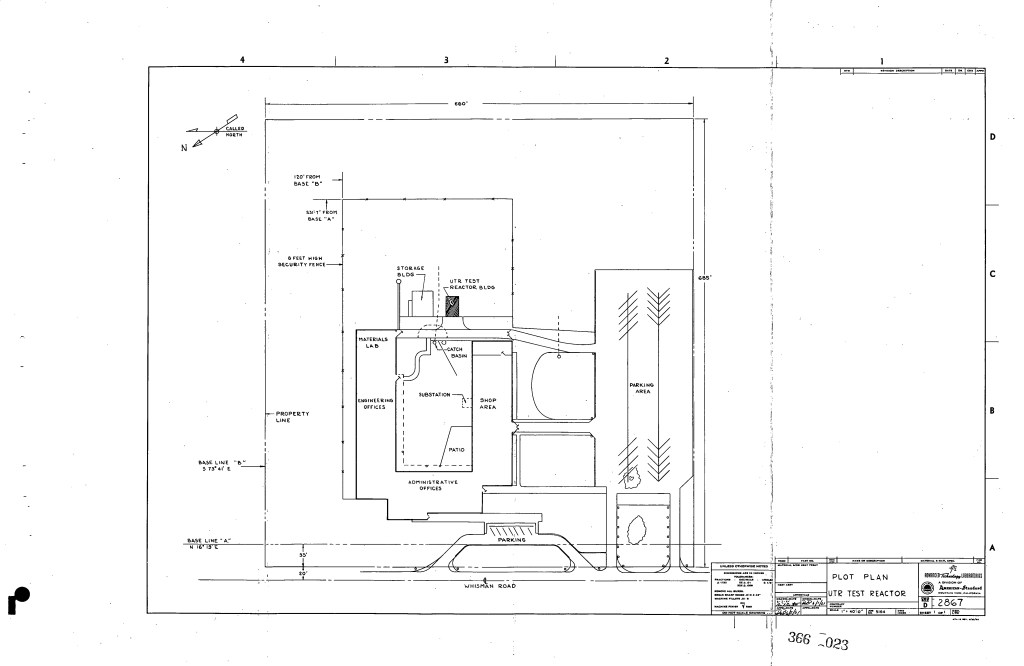
    There were several other portable nuclear reactor plants in the Bay Area, two I featured in this article Two nuclear reactors sites, 369 Whisman Road Mountainview (now Google) and San Ramon CA where the EPA should also look into assessing the damage to the environment and the people who now live within range of those reactor sites. The 369 Whisman Road reactor site had a high curb surrounding the building to contain the radioactive waste!

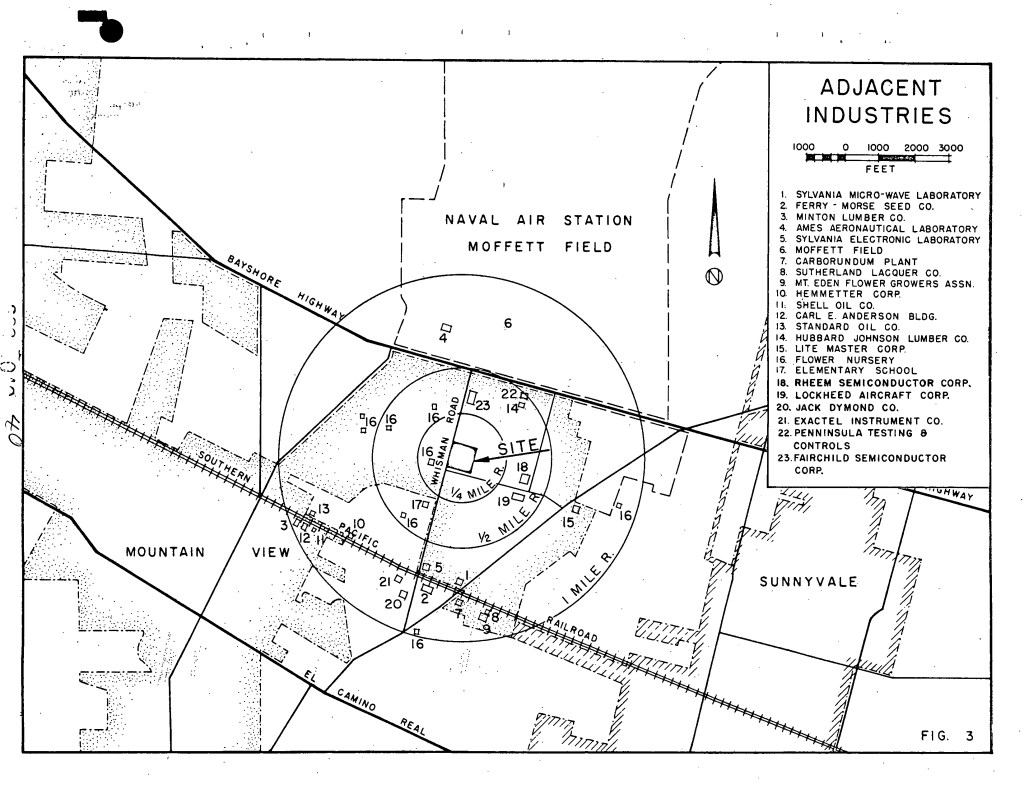
    The EPA has regulations on conducting radiological surveys for sites and basically everything within 200 feet of a site is considered on the site, that goes for chemical contamination as well as radiological. DTSC has interpreted this to mean the property lines of toxic waste sites but the EPA has different rules. Then there is the distance from the contamination to a quarter of a mile is considered a near neighbor and the distance from a quarter of a mile to a mile is also a near neighbor but with a different set of calculations. The danger is evaluated based on the population near a site so in the case of Apple, this could be a big problem for them. How many people work in their Wheel?

    The Federal Law, 40 CFR Appendix A to Part 300 – The Hazard Ranking System which is used to determine if a site is subject to Superfund status, the range of contamination goes out to various distances from the exact contamination site.

    It depends on what happened to the Kr 85 which is a Byproduct Material, meaning it came out of a nuclear reactor and cannot be dumped in low level radiation facilities but would have to be disposed of most likely in the Nevada Test Site.

    In order to use an isotope like this, the facility would require a hot cell which is a device or room to store radiological isotopes usually with mechanical hands to remove the isotope from the container and use it in whatever industrial process GE was using at the time and the necessary Geiger counter device to measure the Beta radiation from this isotope. It has a half life of 10 years so its still hot. Some hot cells are portable and look like aquariums or those isolated rooms with hands you see in movies or TV shows.

    I outline the distances using San Francisco as an example showing the ranges of contamination that can result from Chemical, Biological and Radiological contamination in this article:
    “Downtown San Francisco within Contamination Range of Treasure Island Atomic, Biological and Chemical Warfare training sites”

    If the radiation was used on a device that has since decomposed in the soil, then you have the larger ranges of water and air contamination that can go out 4 miles from the site.

    The Question is, does the EPA know that the isotope was used on the site. Given the other sites in the Bay Area I would give my opinion as to say no, but this will have to be looked into.

    If the Nuclear Regulatory Commission had done its job, then there would be a set of inspections and a series of surveys to confirm the radiological isotopes were disposed of property and how they were used.


    Two nuclear reactors sites, 369 Whisman Road Mountainview (now Google) and San Ramon CA

    siteSUMMARY REPORT ON THE HAZARDS OF THE UTR TEST REACTOR
    ATL Job 5164 ATL-D-619 7 June 1961
    Page 46

    SUMMARY REPORT ON THE HAZARDS
    OF THE UTR TEST REACTOR
    ATL Job 5164
    ATL-D-619
    7 June 1961

    Google currently occupies the location where American Standard built portable nuclear reactors that were sent overseas in trade shows for the Atomic Energy Commission and for colleges and universities. The AEC shut down the facility because it was located in a densely populated area and given the accidents from these reactors and that the location had no shielding or even containment for the radioactive gasses and radioactive water, it was decided to pull the plug on the reactors. They had two reactors on site and built these reactors for other entities:

    Iowa State University
    Virginia Polytechnic Institute / North Carolina State college
    Australia (Atomic Energy Commission)
    Japan (Kinki University) Osaka
    Japan (Tokai University)

    SUMMARY REPORT ON THE HAZARDS OF THE UTR TEST REACTOR
    ATL Job 5164 ATL-D-619 7 June 1961
    Page 27

    From the report page 6:

    “B. Reactor Building
    The reactor will be housed in an existing 20′ x 32′ x 14′ eave height steel frame
    reactor building. The building is supported on a reinforced concrete foundation and has corrugated steel walls and roof and a concrete floor sealed with Amercoat. A concrete curb around the base of the building will prevent run off of radioactive water. Gas-tight construction has not been provided. Entry to the building is provided by two sliding doors, which may be locked with a padlock. A stairway provides access to the top of the reactor. A one-ton electric hoist is available for removing the concrete closures from the reactor”

    Note the curb around the building to prevent run off of radioactive water and the padlock on the door for security. Remember this is for two nuclear reactors.

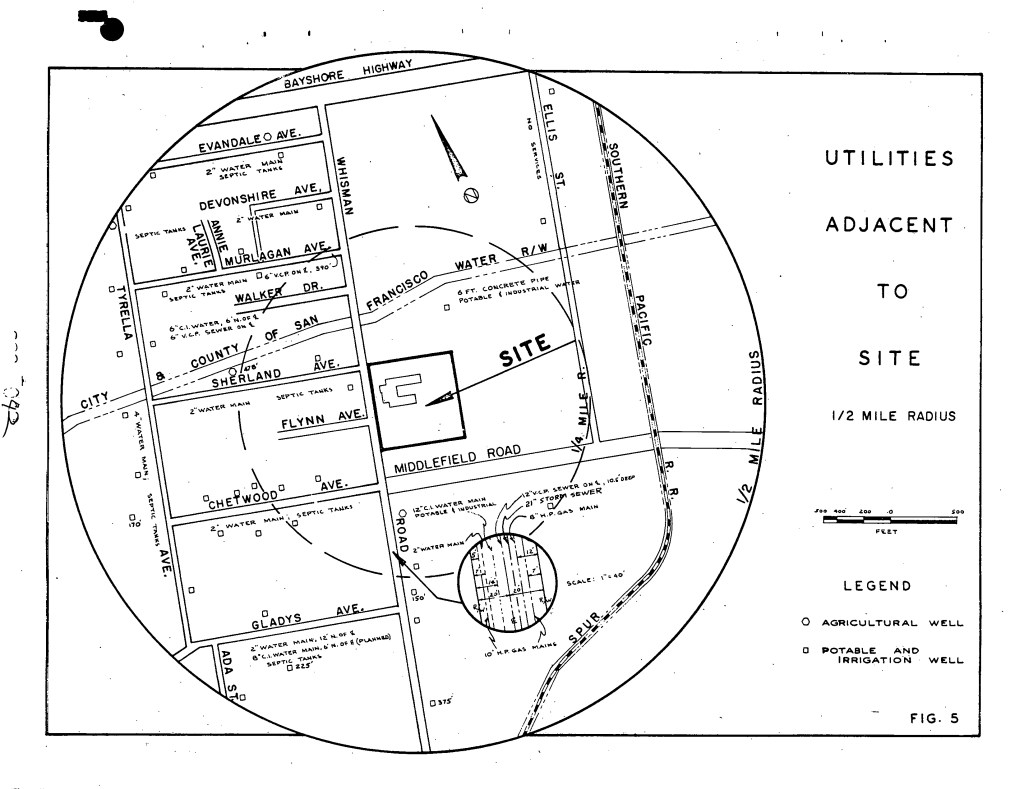
    These are the concentric circles that the Atomic Energy Commission requires for safety. If there was an accident everyone within range would have to be permanently evacuated. page 44

    This reactor type was based on the Argonne reactor which had some serious defects causing a melt down.

    Ruzich, K. C.., Sturm, W. J.. Hazard Summary Report for the Argonne AGN-201 Reactor. United States: Argonne National Laboratory, 1962.
    Continue reading “Two nuclear reactors sites, 369 Whisman Road Mountainview (now Google) and San Ramon CA”

    San Jose CA – GE Nuclear Fuel Processing Facility at The Plant Shopping Center

    Atomic Power Equipment Department of the General Electric Company
    175 Curtner Avenue which is today “The Plant Shopping Center” How can the state do things like this? Here is the State of California’s Envirostor map of the location https://www.envirostor.dtsc.ca.gov/public/map/?global_id=80001780&zl=16

    INDUSTRIAL RADIOACTIVE WASTE DISPOSAL 2503 RADIOACTIVE WASTE DISPOSAL PRACTICES FOR THE ATOMIC POWER EQUIPMENT DEPARTMENT GENERAL ELECTRIC COMPANY SAN JOSE, CALIFORNIA 

    This site was associated with the GE Vallecitos Nuclear Reactor site which is located near Sunol which is next to the San Antonio Reservoir. Let us hope that the creek does not empty into the water supply! In this map the site is near the middle 84 marker on this map and you can see Little Valley Road to its west.

    How could the state of California allow a shopping mall to be built on top of a Uranium processing plant in the middle of the city of San Jose CA?. The site dumped radioactive waste directly into the city’s sewer system according to 1957 standards for disposal of nuclear waste into city sewer systems.

    But 1957 standards for radiation exposure are nuclear accidents today. For example, in 1957 the maximum exposure for workers to be 1500 mrem of radiation a week for a person to be safe, that’s 18 full Rems a year. Today 5 REMS is the maximum amount for a nuclear worker a year but for civilians living on the site 0.1 REM or 100 mrems per year is the limit for safety for members of the public, the people of San Jose. 1 REM is 1000 mrems.

    When the state says it was made safe, ask them what year and what were the standards back then!

    Today’s nuclear radiation exposure levels from the Federal Register

    Continue reading “San Jose CA – GE Nuclear Fuel Processing Facility at The Plant Shopping Center”

    Treasure Island Hunters Point Shipyard ranked 25 worst site by the EPA

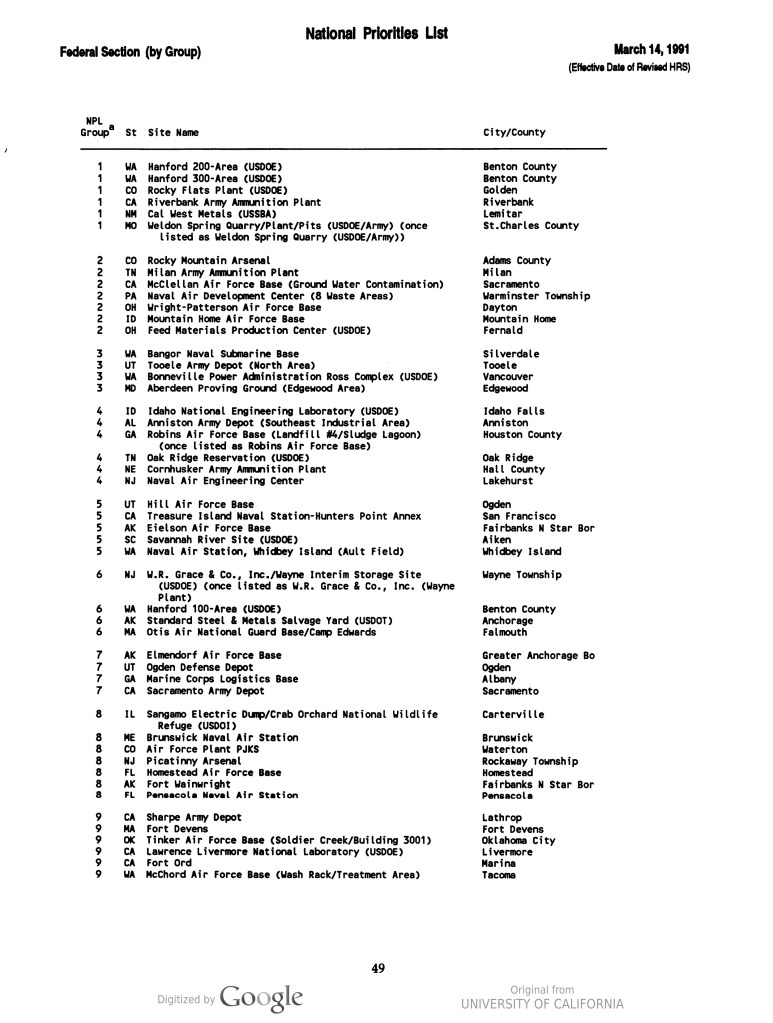
    This is the original National Priorities list ranked by worst to first in classes. Treasure Island Hunters Point Annex is ranked in the 5th class, 25 on this list of names of sites. Note equal to the Savannah River Plant that has to this day, radioactive waste in barrels on the site. It is also worse than a Hanford site.

    Fact Book: National Priorities List Under the Original Hazard Ranking System, 1981-1991, United States. Environmental Protection Agency. Office of Emergency and Remedial Response. Washington, DC: Office of Emergency and Remedial Response, U.S. Environmental Protection Agency, 1993. pp. 49-51

    Fact Book: National Priorities List Under the Original Hazard Ranking System, 1981-1991, United States. Environmental Protection Agency. Office of Emergency and Remedial Response. Washington, DC: Office of Emergency and Remedial Response, U.S. Environmental Protection Agency, 1993. pp. 49-51
    Continue reading “Treasure Island Hunters Point Shipyard ranked 25 worst site by the EPA”

    EARTHDAY 2021 PROTEST SAN FRANCISCO video

    These are the people I am fighting for to publish the Navy reports on my Treasure Island website and on this Disaster Area website documenting the Navy’s contamination of Hunters Point shipyard by the US Navy’s Radiological Defense Laboratory based at Hunters Point and at Treasure Island, the Navy’s Atomic, Biological and Chemical Warfare Training Center.

    And if you want a sample of the Navy’s own sources, of what they dumped and polluted at Hunters Point Shipyard, here is their Health and Safety report from 1960 documenting the exposures by building number and listing the radiological accidents just for 1960
    U.S. Naval Radiological Defense Laboratory., Naval Radiological Defense Laboratory. (1961). Radiological safety at USNRDL: annual progress report health physics division ; 1 January to 31 December 1960. San Francisco, California: U.S. Naval Radiological Defense Laboratory. Note: This text is searchable on that website

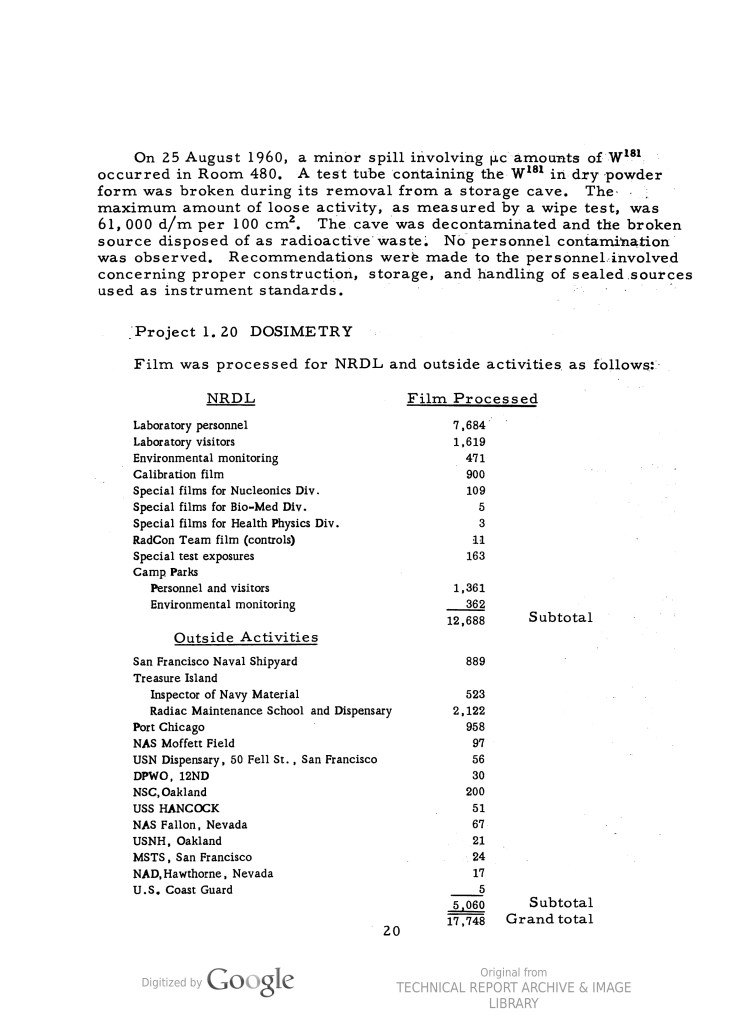
    13577 Radiation Film Badges were used at Hunters Point Shipyard in 1960

    In 1960 the US Naval Radiological Defense Lab developed 2655 Radiation Measuring Film Badges for Treasure Island and 12,688 for the US Naval Radiological Defense Lab at Hunters Point Shipyard along with 889 for Hunters Point Shipyard separate from the Defense Lab. These badges are dosimeters that measure how much radiation a person was exposed to during a period of time and they were collected from all over the Bay Area to be developed and analyzed at the Defense Lab for the year of 1960.

    U.S. Naval Radiological Defense Laboratory., Naval Radiological Defense Laboratory. (1961). Radiological safety at USNRDL: annual progress report health physics division ; 1 January to 31 December 1960. San Francisco, California: U.S. Naval Radiological Defense Laboratory. p 20

    This document is a who’s who of radiological exposure just for one year at the US Navy’s Radiological Defense Laboratory and I highly recommend it as reading material to give you a look into the radiation experiments they conducted on the shipyard (including building numbers) and all throughout the Bay Area, including downtown San Francisco!

    The presence of radiation badges means each time a human being was exposed to radiation over the course of an experiment or regular monitoring of radiation exposure on site. A very frequent and robust radiological contaminations were taking place at the Shipyard and Treasure Island in 1960.

    Camp Parks in Dublin CA was the field station for the Lab where they conducted radiological tests on the base while military personnel worked and lived on the base. These experiments included using the gymnasium to rain down radioactive isotopes to determine its effects on roof structures and that gymnasium was then “cleaned up” and was used by the Navy and then the Air Force when they took over the base and as recently as last year by private entities before it was torn down. Stanford Research did a lot of radiological work at Camp Parks and it is clear they had many nuclear accidents reported in this report from 1960.

    They did this for other locations listed below:

    Dosimeter films developed at the USNRDL 1960
    NRDLFilm ProcessedTotals
    Laboratory personnel7684
    Laboratory visitors1619
    Environmental monitoring471
    Calibration film900
    Special films for Nucleonics Div.109
    Special films for Bio-Med Div.5
    Special films for Health Physics Div.3
    RadCon Team film (controls)11
    Special test exposures163
    Camp Parks Personnel and visitors1361
    Camp Parks Environmental monitoring362
    12688Subtotal
    Outside Activities
    San Francisco Naval Shipyard889
    Treasure Island Inspector of Navy Material523
    Treasure Island Radiac Maintenance School and Dispensary2122
    Port Chicago958
    NAS Moffett Field97
    USN Dispensary, 50 Fell St. , San Francisco56
    DPWO, 12ND30
    NSC, Oakland (Naval Supply Center, Oakland)200
    USS HANCOCK51
    NAS Fallon. Nevada67
    USNH, Oakland (US Naval Hospital Oakland)21
    MSTS, San Francisco24
    NAD, Hawthorne, Nevada17
    U. S. Coast Guard5
    5060Subtotal
    17748Total

    1946 Project Crossroads Nuclear Test Film

    Here is a summary of the time stamps of this video:

    Project Crossroads – Nuclear Test Film (1946)
    Courtesy: U.S. Department of Energy

    1:50 USS independence next to the Nagato before Test Able
    2:20 target ships mapped
    4:14 The scientists and samples
    6:00 Radio controlled drones
    7:00 Manhattan project scientists at Kwajalein
    9:40 dropping of the bomb
    14:31 diffused cloud “dangerous radioactive particles in the air had become so diffused it was no longer a danger to the area.”
    15:52 camera on bikini showing shock wave.
    17:20 map of what ships got hit as they dropped the bomb off target. Independence noted
    18:55 Independence seen just after explosion when the support ships entered the lagoon.
    21:54 animals
    24:31 Skate stating the inside were damaged, so they went inside it.
    25:21 USS Independence
    27:34 Baker Test, second test underwater explosion.
    40:00 USS Independence

    https://youtu.be/2HkLZekOZLU
    Project Crossroads – Nuclear Test Film (1946)
    Courtesy: U.S. Department of Energy

    Continue reading “1946 Project Crossroads Nuclear Test Film”